

Introduction
A few years back, a friend of mine spent his entire monthly marketing budget on Facebook ads. He got a lot of likes and comments, but almost zero sales. So he switched everything to Google Ads the next month. Sales picked up, but his reach dropped completely. He came to me frustrated, asking the same question you are probably asking right now.
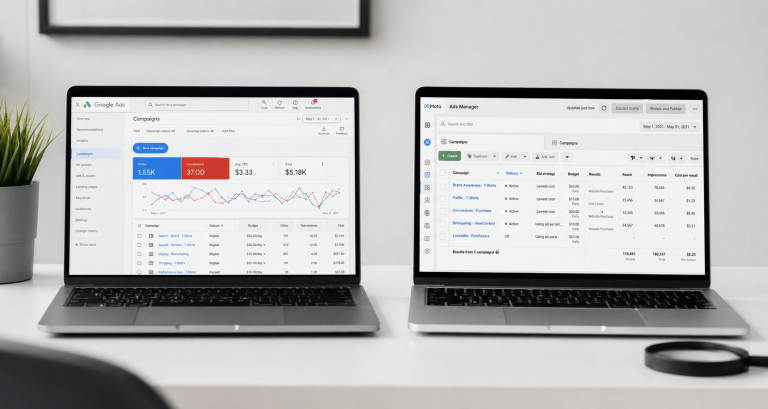
Which is better, Google Ads vs Meta Ads? The honest answer is that both platforms are powerful. But they work very differently. Picking the wrong one for your goal can waste your budget fast.
In this post, I will break down 7 smart differences between these two platforms, compare them side by side, and help you figure out which one fits your business best. Let us get into it.
Table of Contents
Google Ads vs Meta Ads: Understanding the Basics
What is Google Ads?
Google Ads is a paid advertising platform by Google. It lets businesses show ads when people search for something specific on Google. Think of it as showing up exactly when someone types “best running shoes under 3000” into the search bar. Your ad appears right at the top.
Google also has a Display Network where your ads appear on millions of websites, apps, and YouTube. It is the world’s largest search advertising network, and it drives very high purchase intent.
According to Forbes, Google holds over 91% of the global search engine market share, which makes Google Ads incredibly powerful for reaching people who are actively looking to buy.
What is Meta Ads?
Meta Ads covers paid advertising on Facebook, Instagram, Messenger, and WhatsApp. These platforms let you target people based on their interests, age, location, behavior, and even their life events. You are not catching someone mid-search. Instead, you are reaching them while they scroll through their feed.
Meta Ads are brilliant for building brand awareness, generating leads, and reaching new audiences who do not even know your business exists yet. The targeting options are incredibly detailed and powerful.
Key Differences Between Google Ads vs Meta Ads
1. Audience Intent
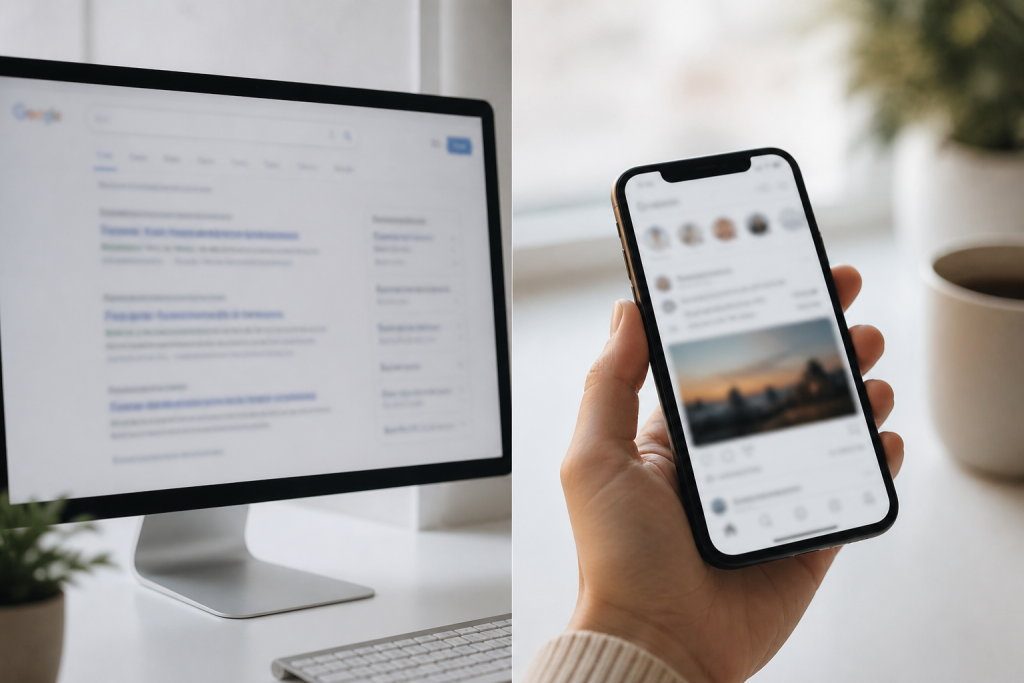
Google Ads targets people with high purchase intent. They are actively searching for something. When someone types “buy office chair online”, they are already close to making a decision. Google puts your ad right in front of them at the perfect moment.
Meta Ads works on passive intent. People are not searching for your product. They are scrolling through reels or catching up with friends. Your ad interrupts that moment. Done right, it creates desire. Done wrong, it gets ignored.
2. Targeting Options
Both platforms have powerful targeting, but they work differently.
- Google Ads: Targets based on keywords, location, device, and search behavior
- Meta Ads: Targets based on age, gender, interest, job title, life events, and look-alike audiences
Meta’s targeting is unmatched for finding very specific types of people. Google’s targeting wins when you want to catch people mid-decision.
3. Ad Formats
Google Ads gives you:
- Search ads (text only, appear on Google search)
- Display ads (banner images on websites)
- Shopping ads (product listings with images and price)
- YouTube ads (video-based)
Meta Ads gives you:
- Image ads (single photo)
- Video ads (Reels, Stories, Feed videos)
- Carousel ads (multiple images in one swipe)
- Collection ads (product catalogues)
Meta clearly wins on visual creativity. Google wins on reaching people at the right search moment.
4. Cost and Budget
The cost per click (CPC) on Google Ads is generally higher because competition for search keywords is fierce. Depending on your industry, CPC can range from Rs. 10 to Rs. 500 or more.
Meta Ads tend to be more affordable. You can reach a large audience with a smaller daily budget, especially if your creative is strong. However, cheaper clicks do not always mean better returns.
5. Results Speed
Google Ads can deliver results much faster. If someone searches for your product today and clicks your ad, they may buy within minutes. The path from search to sale is short.
Meta Ads often need more time. You may need to warm up your audience across multiple touchpoints before they convert. But the long-term brand awareness you build on Meta is very valuable.
6. Best Use Case
Here is a simple rule I always share with my clients:
- Use Google Ads if people are already searching for what you sell
- Use Meta Ads if you need to introduce your product to people who do not know it exists yet
- Use both if you want to dominate your market at every stage of the buyer journey
Google Ads vs Meta Ads: Which Platform Gets Better Results?
The truth is that neither platform is universally better. It all depends on your business type, your goal, and your budget.
For e-commerce businesses selling physical products, Google Shopping Ads often deliver strong and measurable ROI. But Meta Ads can generate massive top-of-funnel awareness that feeds your Google campaigns later.
For service businesses like consultants, coaches, or agencies, Meta Ads can generate quality leads through lead generation forms. Google Ads can capture people actively searching for your service.
A study referenced on Wikipedia’s PPC page highlights that search-based PPC consistently shows higher conversion intent than display-based advertising, which aligns with why Google Ads often wins on direct conversions.
Full Comparison Table: Google Ads vs Meta Ads
Feature | Google Ads | Meta Ads |
Ad Intent | High (search-based) | Low to medium (social browse) |
Audience Targeting | Keyword + demographic | Interest + behavior + lookalike |
Best For | Buying-ready customers | Brand awareness + new audiences |
Avg. CPC | Higher ($1–$5+) | Lower ($0.50–$2) |
Ad Formats | Search, Display, Shopping | Image, Video, Carousel, Stories |
Learning Curve | Moderate to high | Low to moderate |
ROI Speed | Faster for direct sales | Slower, but scalable |
Budget Flexibility | Any budget | Works well with small budgets |
Remarketing | Yes (Google Display) | Yes (Custom audiences) |

Pros and Cons of Each Platform
Pros of Google Ads
- Reaches people with high purchase intent
- Results can come in very quickly
- Strong ROI for direct-response campaigns
- Works well for local businesses targeting nearby customers
- Massive reach across search, YouTube, and the web
Cons of Google Ads
- Higher cost per click in competitive industries
- Requires keyword research and ongoing management
- Limited visual creativity compared to Meta
- Harder to reach audiences who are unaware of your product
Pros of Meta Ads
- Highly detailed audience targeting options
- More affordable CPC, especially for awareness goals
- Excellent visual ad formats including video and carousel
- Great for building brand awareness and remarketing
- Works well for reaching cold audiences and new markets
Cons of Meta Ads
- Lower purchase intent compared to Google search
- Requires strong creative to stand out in a busy feed
- Results can take longer to show up
- Ad fatigue can set in quickly if you do not rotate creatives

How to Choose and Get Started
Ready to pick a platform and launch your first campaign? Here is a simple actionable guide to help you move forward:
- Step 1: Define your goal clearly. Are you trying to get direct sales today, or build awareness over time?
- Step 2: Check if people are already searching for your product on Google. Use Google Keyword Planner to verify.
- Step 3: If search volume exists, start with Google Ads. If not, start with Meta Ads to create demand.
- Step 4: Set a test budget of at least Rs. 5,000 to Rs. 10,000 per platform for 2-4 weeks.
- Step 5: Track results weekly. Measure CPC, conversions, and cost per result.
- Step 6: Once one platform proves ROI, scale it. Then layer in the second platform to cover the full buyer journey.
For more step-by-step marketing guides and strategies, visit GrowWithMridul.in where Mridul shares practical advice built for Indian entrepreneurs and small businesses.
Conclusion
Here is what you have learned today. Google Ads wins when people are already searching for what you sell. Meta Ads wins when you need to build awareness and reach new audiences creatively.
The 7 key differences we covered, from audience intent and targeting to cost, ad formats, and results speed, all point to one truth: these platforms are not competitors. They are partners.
My direct advice: Start with the platform that matches your current goal. Test it with a real budget. Measure results honestly. Then build from there.
The best marketers do not pick sides. They understand both platforms and use them together smartly. You now have the knowledge to do exactly that. Go put it to work.
FAQ
Is Google Ads better than Meta Ads for small businesses?
It depends on your product and goal. If people are already searching for your service, Google Ads gives faster results. If your budget is smaller and you need to reach a wider audience, Meta Ads can be more affordable. Many small businesses do well starting with Meta Ads and adding Google Ads once they have consistent revenue.
Which platform has a lower cost per click: Google Ads or Meta Ads?
Meta Ads generally have a lower cost per click. Google Ads can be more expensive, especially in competitive industries like finance, legal, or insurance. However, lower CPC does not always mean better ROI. Google’s clicks often convert better because the user intent is much higher.
Can I run Google Ads and Meta Ads at the same time?
Yes, and many successful businesses do exactly that. Running both platforms together lets you capture people who are actively searching on Google while also building awareness and retargeting on Meta. Just make sure you have enough budget and tracking set up to measure results from each platform separately.
Which is better for e-commerce: Google Ads vs Meta Ads?
Both work well for e-commerce. Google Shopping Ads are excellent for capturing buyers who are ready to purchase. Meta Ads are great for reaching new customers who do not know your brand yet. A smart e-commerce strategy uses Google Ads for bottom-of-funnel conversions and Meta Ads for top-of-funnel brand awareness and retargeting.
How much budget do I need to start with Google Ads vs Meta Ads?
You can start with as little as Rs. 5,000 to Rs. 10,000 per month on either platform. However, a test budget of Rs. 15,000 to Rs. 20,000 per month per platform gives you better data to work with. Always start small, track results carefully, and scale what works.