


Introduction
I remember the first time I published a blog post. I waited. And waited. Nobody came.I had no idea that writing alone was not enough. What I was missing was search engine optimization — the skill that tells Google your content is worth showing to people.SEO is how websites get found. It is how a small blog competes with big brands. And the best part? You do not need to pay for it. In this post, you will learn exactly what search engine optimization means, how it works, and the 6 key things that actually move the needle on rankings.
Table of Contents
What Is Search Engine Optimization Really?
Search engine optimization (SEO) is the process of improving your website so it appears higher in Google’s search results. When someone types a question into Google, SEO decides which pages show up on page one and which ones get buried on page ten.
Think of Google as a librarian. It reads millions of web pages and organizes them. When you search for something, it picks the most relevant, most trustworthy, and most helpful results. SEO is how you make your page look like the best answer.
It is not about tricking Google. It is about making your content genuinely useful, easy to read, and easy for search engines to understand.
According to Moz, SEO covers everything from the words on your page to how other websites link to you online.
How Search Engine Optimization Actually Works
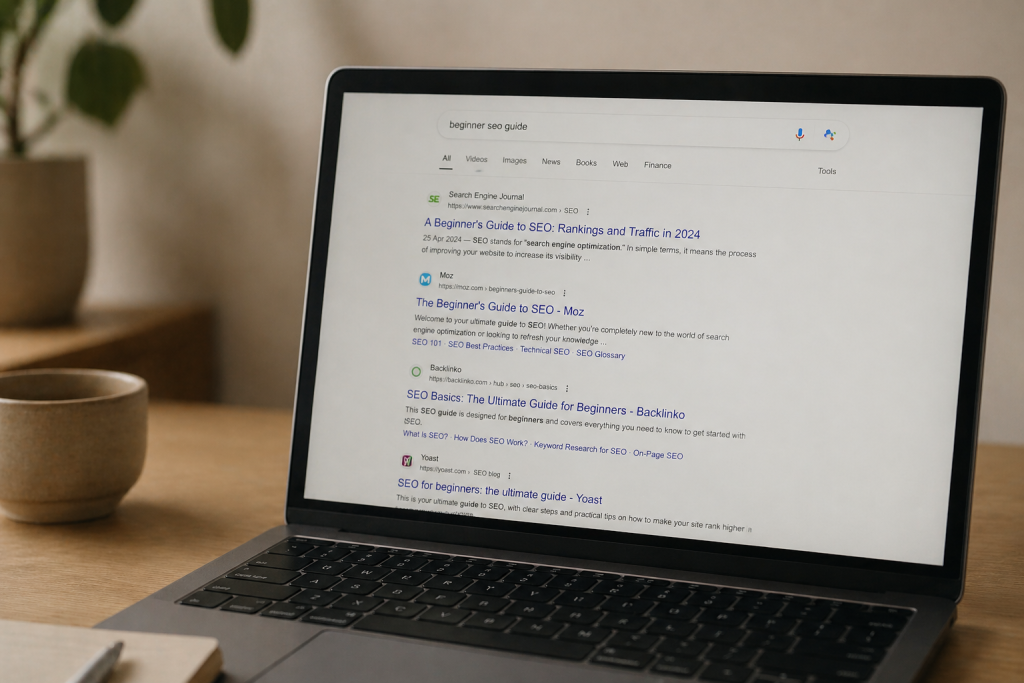
Google uses automated programs called crawlers to read every page on the internet. These crawlers collect data and store it in a massive index. When you search something, Google’s algorithm goes through that index and ranks pages based on hundreds of signals.
These signals include:
- How relevant your content is to the search term
- How fast your page loads
- How many other trusted sites link to you
- How long visitors stay on your page
The goal of search engine optimization is to make your website score well on as many of those signals as possible. It is not one single trick. It is a combination of smart, consistent actions done over time.
The 6 Key Points of Search Engine Optimization
Keyword Research Is the Foundation
Before writing anything, you need to know what words your audience types into Google. These are called keywords. Tools like Google Keyword Planner or Ubersuggest help you find the right ones.
Focus on keywords that are:
- Relevant to your topic
- Searched frequently
- Not too competitive for a new site
Pick one main keyword per page. Use it naturally in your title, headings, and first paragraph.
On-Page Optimization Matters More Than You Think
On-page SEO means making each page of your website as clear and relevant as possible. This includes:
- Writing a strong title tag with your keyword
- Adding a compelling meta description
- Using H1, H2, and H3 headings properly
- Including your keyword in the first 100 words
- Adding alt text to all images
These are all things you control directly. Get them right and Google understands your page much better.
Technical SEO Keeps Your Site Healthy
Technical SEO is the behind-the-scenes stuff that keeps your website running smoothly. Google cannot rank a page it cannot access or read properly.
Key technical SEO tasks include:
- Making your site mobile-friendly
- Improving page speed (aim for under 3 seconds)
- Setting up an XML sitemap
- Fixing broken links and 404 errors
- Using HTTPS for security
You do not need to be a developer to handle the basics. Most WordPress plugins like RankMath or Yoast help you fix these automatically.
Content Quality Drives Rankings
Google’s job is to give users the best answer. So the best content wins. Period.
Good content for SEO means:
- It answers the exact question the user typed
- It is written clearly and is easy to read
- It is longer and more detailed than the competition
- It includes images, lists, and structured headings
- It gets updated regularly
Do not write thin, vague posts just to publish. Write content that genuinely helps the reader. That is what ranks.
Backlinks Build Authority
A backlink is when another website links to your page. Think of it as a vote of trust. The more quality backlinks you have, the more Google trusts your site.
Not all backlinks are equal. A link from a well-known site like Forbes is worth far more than a link from a random unknown blog.
Ways to build backlinks:
- Write guest posts on other blogs
- Create shareable content like infographics or guides
- Get listed in relevant directories
- Reach out to sites that have linked to similar content
Avoid buying cheap backlinks. They can get your site penalized.
User Experience Signals That Google Cares About
Google tracks how users behave on your page. If someone clicks your link and immediately leaves, that is a bad signal. This is called a high bounce rate.
Improve user experience by:
- Making your design clean and easy to navigate
- Using short paragraphs and lots of white space
- Including internal links to keep visitors reading more
- Adding clear calls to action
- Making sure your site works perfectly on mobile
When visitors stay longer and click around your site, Google sees your page as valuable and ranks it higher.
Search Engine Optimization vs Paid Ads: A Quick Comparison
| Feature | Search Engine Optimization | Paid Ads (PPC) |
|---|---|---|
| Cost | Free (time investment) | Pay per click |
| Speed of results | 3 to 6 months | Immediate |
| Long-term value | Builds over time | Stops when budget ends |
| Trust level | Higher (organic) | Lower (marked “Ad”) |
| Effort required | Ongoing content and optimization | Budget and ad management |
| Best for | Long-term traffic growth | Quick promotions or launches |

Pros and Cons of Search Engine Optimization
Pros of Search Engine Optimization
- Free traffic that does not stop when your budget runs out
- Builds long-term authority and brand trust
- Compound growth means old content keeps sending traffic
- Targets high-intent users who are actively searching
- Improves overall website quality for all visitors
- Better click-through rates compared to paid ads
Cons of Search Engine Optimization
- Results take 3 to 6 months on average to appear
- Google’s algorithm changes frequently and rankings can shift
- Requires consistent effort over a long period
- Competitive niches are very hard to break into without backlinks
- Technical knowledge is needed for advanced optimization
How to Start With Search Engine Optimization Today
Starting does not have to be complicated. Here is a simple action plan:
- Install RankMath or Yoast SEO on your WordPress site right away
- Pick one focus keyword for each new post you write
- Optimize your title tag and meta description before every publish
- Write at least 1000 words of genuinely helpful content per post
- Add proper headings (H1, H2, H3) to structure every article
- Get your first backlinks by commenting on niche blogs or writing a guest post
- Check your site speed using Google PageSpeed Insights and fix slow pages
- Link your pages internally so visitors keep exploring your site
If you want a complete beginner-friendly guide that walks you through all of this step by step, visit growwithmridul.in and start learning today.

Final Thoughts
Search engine optimization is not magic. It is a skill. And like any skill, the more you practice it, the better your results get.
Here is what we covered today:
- Keyword research sets the foundation
- On-page SEO makes your content clear to Google
- Technical SEO keeps your site running well
- Content quality is what actually earns rankings
- Backlinks build trust and authority
- User experience tells Google your page is worth ranking
Start with one thing. Fix your titles. Optimize one post. Build one backlink. Small actions add up fast.
You do not need a big budget or a team of experts. You just need the right knowledge and the willingness to take action. Now you have both.
Frequently Asked Questions
FAQ: What does search engine optimization mean for small businesses?
For small businesses, search engine optimization means showing up when local customers search for what you offer. It helps you compete with bigger brands without spending money on ads. A well-optimized Google Business Profile combined with a fast, keyword-focused website can bring real customers through your door.
FAQ: How long does search engine optimization take to show results?
Most websites start seeing noticeable results from search engine optimization within 3 to 6 months. Some competitive keywords can take longer. The key is to stay consistent, keep publishing quality content, and build backlinks steadily over time. Do not expect overnight results.
FAQ: What are the best free search engine optimization tools?
The best free tools for search engine optimization include:
- Google Search Console for tracking your rankings and indexing
- Google Analytics for monitoring your traffic
- Ubersuggest for keyword research
- PageSpeed Insights for checking your site speed
- RankMath (free version) for WordPress on-page optimization
FAQ: Is search engine optimization still relevant in 2025?
Absolutely. Search engine optimization is more important than ever in 2025. Google processes over 8.5 billion searches per day. Organic search remains the number one source of website traffic globally. As AI-generated content floods the internet, well-optimized, genuinely helpful content stands out even more.
FAQ: Can I do search engine optimization myself without hiring an agency?
Yes, you can. Most beginner and intermediate search engine optimization tasks are things anyone can learn and do on their own. Focus on keyword research, clean on-page optimization, and regular content publishing. As your site grows, you can consider hiring an expert for technical audits or link building campaigns.